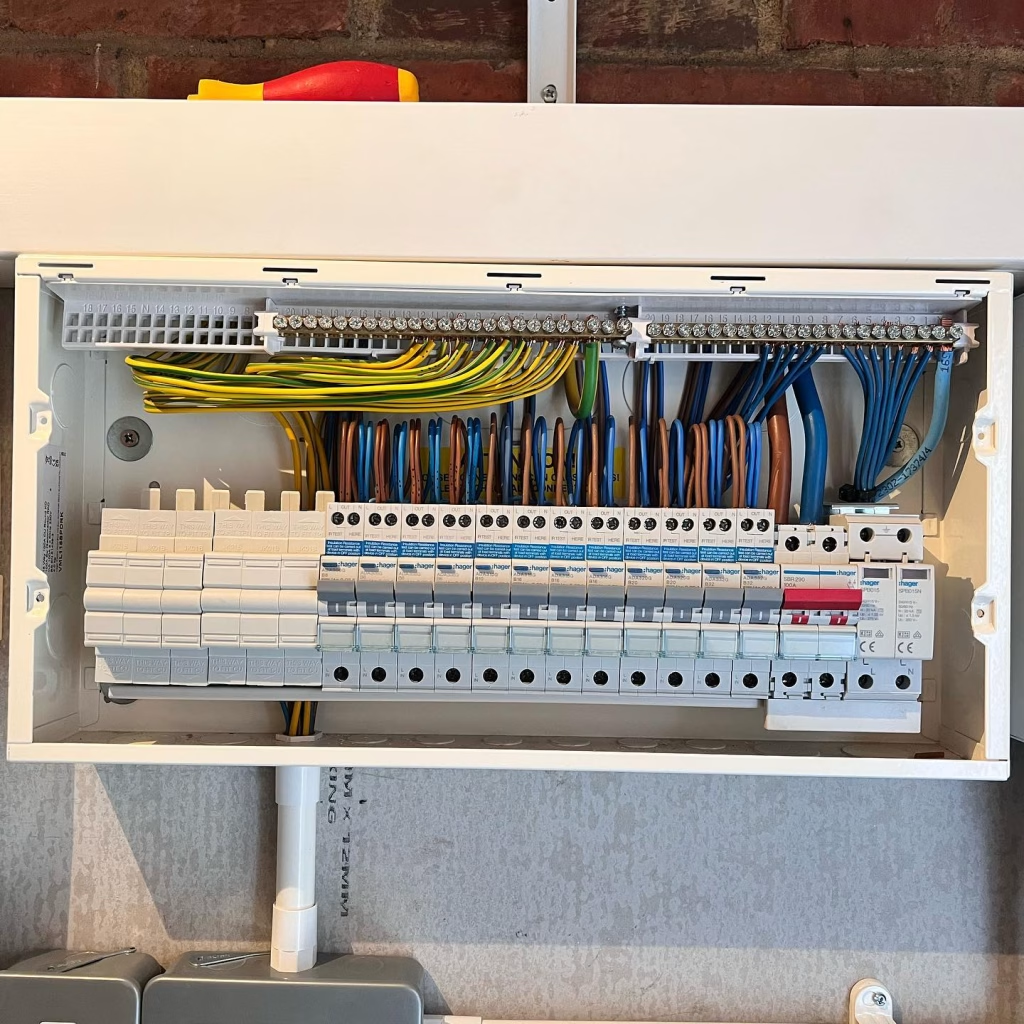
Most homes need a full rewire every 25 to 30 years or so. If your wiring is older than that, or you are seeing warning signs like a fuse box with old rewireable fuses, scorch marks, or lights that flicker when the kettle goes on, it is worth having it checked. The only way to know for certain is an EICR, an inspection that tells you the real condition of your wiring rather than a guess.
Here is how to tell whether you are due, and what a rewire actually involves once you are.
The quick answer: when a house needs rewiring
Wiring does not last forever. The cabling, the fuse board and the connections all age, and once they pass their useful life they stop meeting current safety standards. As a rough guide, if the installation is more than about 30 years old and has never been updated, it is a strong candidate. Older than that and untouched, it almost certainly needs attention.
That said, age is only part of it. What matters is condition, and that is what the signs below point to.
Signs your house might need rewiring
Look out for:
- A fuse box with old ceramic fuses or rewireable fuse wire, rather than modern circuit breakers and an RCD.
- Cabling with a rubber, fabric or lead sheath. Modern cable is PVC. If you can see the old stuff in the loft or under the floor, that is a clear flag.
- Sockets that are sparse, browning, or warm to the touch.
- Lights that flicker or dim when something else switches on.
- Breakers that trip often for no obvious reason.
- A faint burning smell near sockets or the fuse board. That one needs looking at straight away.
One or two of these on their own are not proof, but together they build a picture. If several ring true, book an inspection.
Why older Surrey homes are more likely to need it
Plenty of the housing across Surrey is period or simply older stock, and much of it is on its original or first-generation wiring. Areas like Weybridge, Guildford and the villages around Woking have a lot of homes that look immaculate but are running on electrics that were installed for a very different set of demands. Modern life asks far more of a circuit than a house from the 1970s was ever wired for. That mismatch is where problems start.
What a rewire actually involves
A rewire is one of the larger jobs a home will have done, so it helps to know the shape of it. It runs in two stages. First fix is the disruptive part, running new cables through walls, floors and ceilings, which means some lifting of floorboards and chasing of walls. Second fix is the tidy end, fitting the sockets, switches, light fittings and the new consumer unit, then testing and certifying everything.
You can usually stay in the house during the work if it is done room by room, though it is messier than living somewhere empty. A full rewire of an average home typically takes from a few days to a couple of weeks, depending on size and access.
How much does a rewire cost?
Honestly, it depends. A rewire is priced per property, because the size of the home, its age and layout, and whether you are living in it during the work all change the figure. It is one of the bigger domestic electrical jobs, so expect it to run into several thousand pounds for a full house. The only accurate number is a fixed quote after a proper survey, and any electrician worth using will give you that in writing before starting.
Frequently asked questions
How long does a rewire take? Most domestic rewires take from a few days to a couple of weeks, depending on the size of the property and how easy the access is. You will get a timeline with your quote.
Can I live in the house during a rewire? Usually yes, if the work is done room by room. It is dusty and disruptive while it happens, but you do not normally have to move out.
Do I get a certificate afterwards? Yes. A rewire should be tested and signed off, and you should receive an Electrical Installation Certificate. Notifiable work is also certified under Part P of the Building Regulations and notified to building control.
How do I know if I need a full or partial rewire? An EICR will tell you. Some homes only need part of the installation updated rather than the lot, and a proper inspection is what separates the two.
Not sure where your wiring stands? We carry out inspections and rewires for homes across Surrey, and we will give you a straight answer rather than a scare story. [See our residential electrical work] or get in touch for a quote.